Proactive odour management solutions
Digital odour monitoring solutions providing 24/7 insights to navigate urbanisation, reduce costs of emissions control and avoid impact.
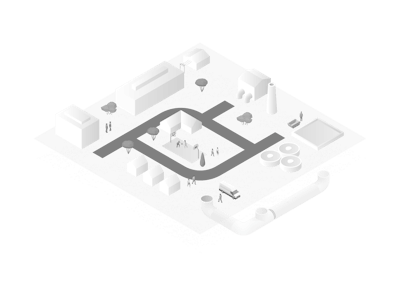
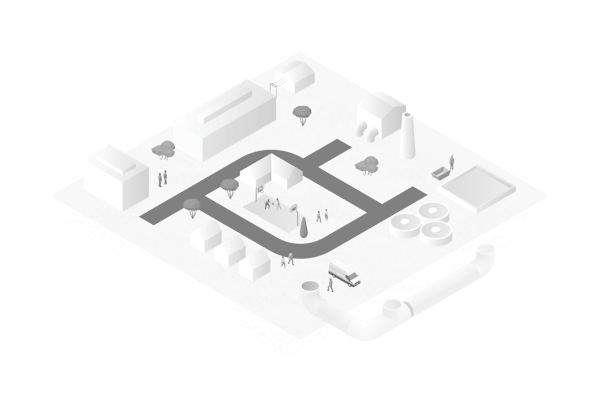



THE CHALLENGE
Responding to odour events and complaints is notoriously difficult. As a result, many odour problems are chronic and communities can become hostile about it.
Unforeseen changes in the weather, mitigating emissions and identifying the source of odour events can also hinder operational efficiency. Particularly if the site is located near a residential community with limited tools to identify issues quickly and effectively.
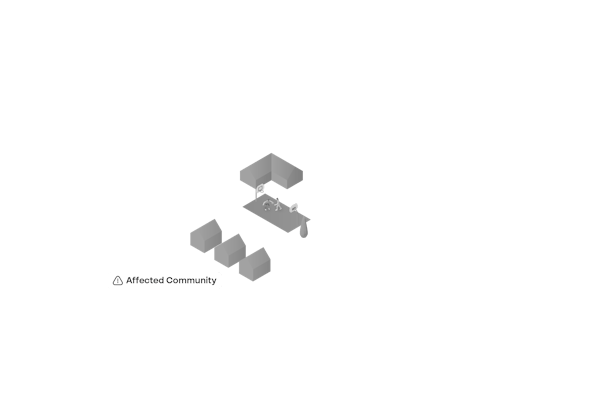


TODAY'S APPROACH
Industrial operators and municipalities must engage with communities early and transparently, demonstrating a proactive approach to odour management.
Odour abatement is still a challenge for operators today despite a wide range of options. It’s critical to know the precise time to engage odour control measures or how external factors like the weather might determine future impact.

OUR SOLUTIONS
We understand the importance efficient operations play within growing populations.
Our digital solutions enable operators to navigate urbanisation with situational awareness in order to achieve successful outcomes for all stakeholders.
The complete solution for proactive odour management
Our integrated hardware and software solution gives you the tools to manage an odour problem quickly and efficiently in an easily accessible, intuitive platform.
DATA COLLECTION
ENVIROSUITE CLOUD PLATFORM
OPERATIONAL GUIDANCE
DATA COLLECTION
ENVIROSUITE CLOUD PLATFORM
OPERATIONAL GUIDANCE
Purpose-built to solve odour management challenges
Diagnose the source of odour complaints
Proprietary algorithms streamline complaint management at your site while verifying valid and invalid complaints from the community.
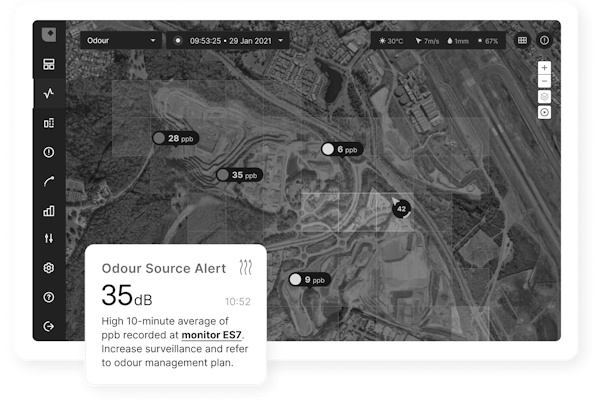
Identify problematic emission sources
Advanced operational guidance helps locate problematic emissions sources across your operations to deploy targeted mitigation strategies.
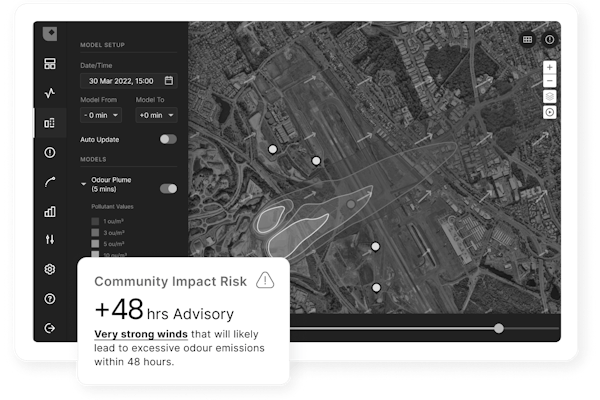
Schedule high risk activities at the right time
Hyperlocal weather forecasts, dynamic scenario modelling and predictive alerting help avoid community impact and identify site efficiency gains.
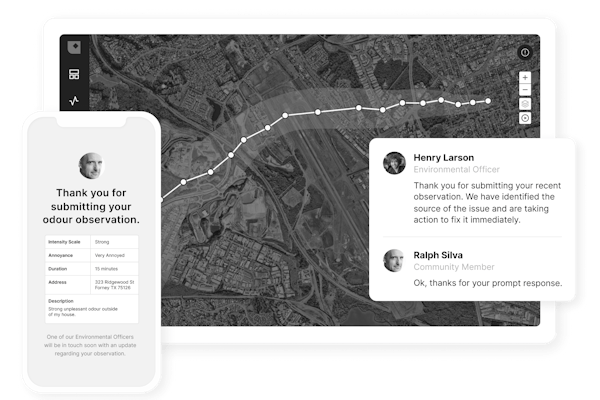
Build community trust with transparency
Automated complaint management with public portal display lets you take ownership of your site's impact and demonstrate responsible operations.
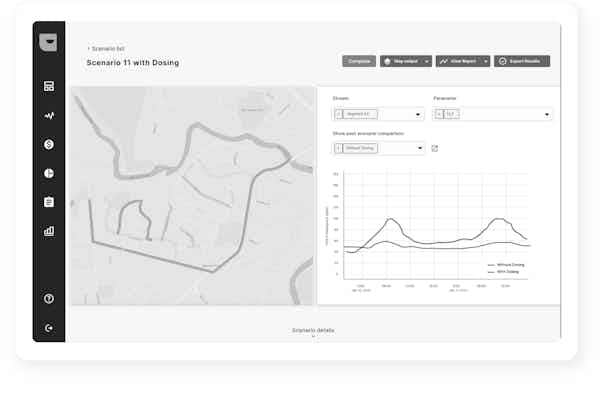
Optimise investments across the entire lifecycle
Reduce OPEX and CAPEX by saving costs on chemical dosing, asset replacement and odour investigations
Reduce safety risks on staff and community
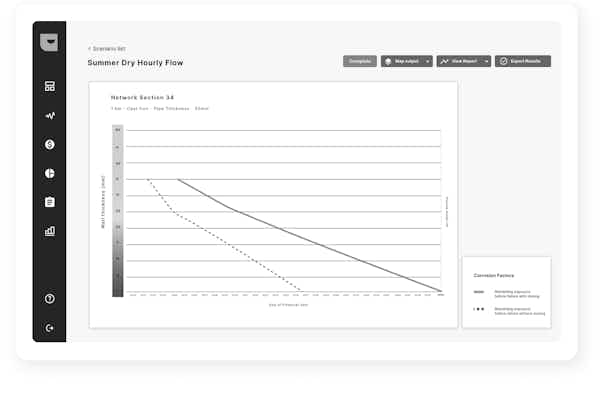
Insights to identify risks quickly and accurately, assisting with planning and resource allocation of your sewer network.
Extend asset life across the sewer network
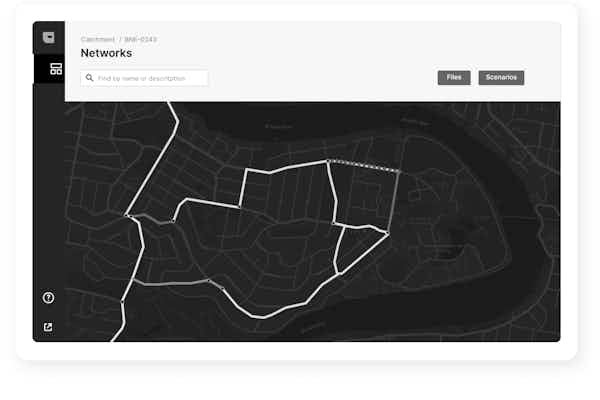
Precise information on where to allocate resources and extend the network life of their sewer networks.

Streamline odour measurement at your site
Reduce odour monitoring and mitigation costs
Minimise expensive stoppages and downtime
Respond quickly to community concerns
No hassle, site-specific implementation
FAQs
Here are answers to common questions about Envirosuite's odour monitoring system. Reach out to our team today if you don't see the answer you are looking for.
Envirosuite goes beyond simple visualisation and basic odour monitoring applications. The power of Envirosuite is in the capture, storage and analysis of real-time data and forecasting abilities, giving it unique application to evolving operational issues. In addition to compliance, the user has powerful tools to respond quickly to alerts, minimise or avoid off-site impacts and hence, be a good neighbour.
Hyperlocal weather forecasting and real-time odour monitoring networks can play an essential role in supporting odour abatement strategies at landfill sites. By understanding weather patterns and how they can impact odour dispersion, operators can integrate with their odour control measures to ensure that they are optimised for reducing the negative impact of emissions on public health and neighbouring communities.
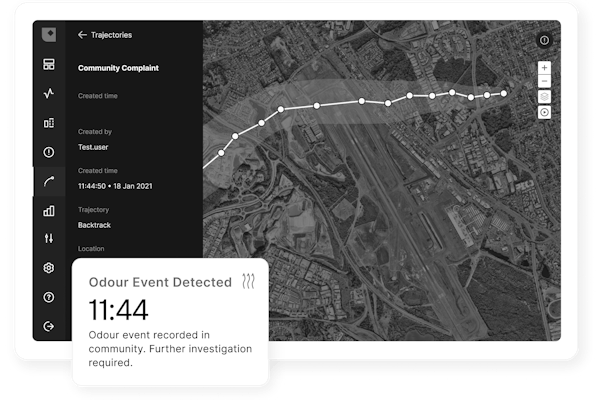
Reverse trajectory modelling is a meteorological tool that allows you to instantly run models that trace the likely source. Staff at your site are able to determine if a complaint submitted by a community member was in fact caused by their site, and is valid, or came from another source - all within minutes.
The path and elevation of the detected odour for up to 60 minutes preceding the complaint can be shown by pinpointing where and when the complaint was generated. As a result, you are able check if that trajectory leads back to their location or points to another site (such as a neighbouring industrial facility), or possibly natural causes, as the responsible entity.
The financial benefits of our odour management solution vary according to the nature of the risks being managed. The benefits comprise tangible returns such as reduced operating costs or improved scheduling, and intangibles such as improved social license to operate.
As an example, for an outlay of AUD$100,000 per year, per site (excluding initial odour monitoring system installation) an Envirosuite solution at a wastewater treatment plant has been shown to produce a AUD$700,000 return in one year through improved odour management, reduced plant operating costs, efficient complaints resolution, and avoided degradation to asset health. This does not include any of the intangible benefits such as improved community relations. Envirosuite is subscription based Software-as-a-Service (SaaS). Pricing is simply on a periodic license fee, although depending on the set-up needs (e.g. odour monitoring system installation, non-standard reporting configurations) there may be initial implementation costs.
The subscription covers system access, updates, data storage and support services. The advantage of a subscription service is that no CAPEX outlay is required, and the cost typically fits within a client’s OPEX budget. Our monitoring and forecasting solutions are designed for rapid deployment, in as little as a few days.
The Envirosuite team and technology platform remotely self-monitors all in-service instruments to quickly identify outages and issues with measurements in accordance with the service level agreement. In cases where sensors may be offline, our systems detect the downtime, and we alert the local teams to rectify and minimise system downtime.
The service level agreements come in three levels, Gold, Silver and Bronze. Get in touch with us today to find out more.
We are the world’s leading environmental intelligence provider.
Read more
Envirosuite helps businesses who are seeking answers on managing the environment in which they operate.
We’ve been at the forefront of environmental intelligence since 1990 managing air quality, odour, noise, vibration and water challenges.
4000+
connected devices providing situational awareness to operations.
45+
countries with more informed and engaged local communities.
250+
technologists, scientists, engineers, and analysts at your fingertips.
30+
years experience solving complex environmental challenges, intelligently.
We'll work with you to get up and running quickly
Odour management review
Our team of specialists can answer questions you may have about odour management, community engagement or environmental impact challenges you may be experiencing at your site.
Expert solution design
Let us map out your priorities to understand your current odour monitoring efforts and challenges you are facing at your site. We can show you exactly how Envirosuite can help you tackle them with proactive odour management.
Site-specific implementation
Your project’s success is the core of ours. We can hook into your pre-existing environmental monitoring and sensor networks at your site or make recommendations for third-party hardware.
Let’s get started today.
Customer Stories
"Envirosuite has helped us to baseline local hydrogen sulfide levels to better evaluate odour mitigation efforts and keep the community informed of air quality in the area. The system is being expanded to track additional sources to best target odour reduction efforts and identify capital improvement projects that will have beneficial impacts on the Kalamazoo community."

Ready to make confident decisions to reduce odour impact?
Find out how Environmental Intelligence can help you unlock value beyond odour monitoring.